Bayshore Communication | Florida Digital Marketing Experts
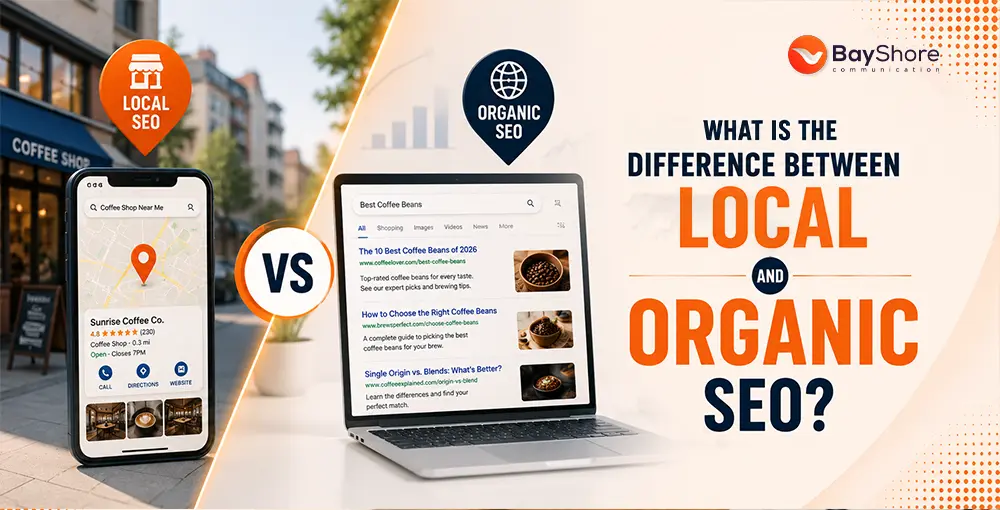
Your company is listed on the Google Map Pack for local searches thanks to local SEO. Organic SEO earns you ranked blue-link results across broader queries. Local targets geography. Organic targets authority. Both matter. Neither replaces the other.
Main Takeaways
Local SEO = proximity-based visibility in map listings and local packs
Organic SEO = content and backlink authority driving SERP rankings
Local converts faster. Organic compounds longer.
Florida businesses need a dual strategy to dominate search.
Google ranks them differently. You should treat them differently.
46%
of Google searches have local intent (2025)
76%
of local mobile searches visit a biz within 24hrs
53%
of web traffic still comes from organic search
3.5x
higher close rate for local SEO vs outbound
1.Organic SEO is for Authority, While Local SEO is for Proximity
Both disciplines share a platform but have different gurus. Local SEO tells Google where you are. Organic SEO tells Google how much you know. Miss that distinction and your strategy falls apart before it starts.
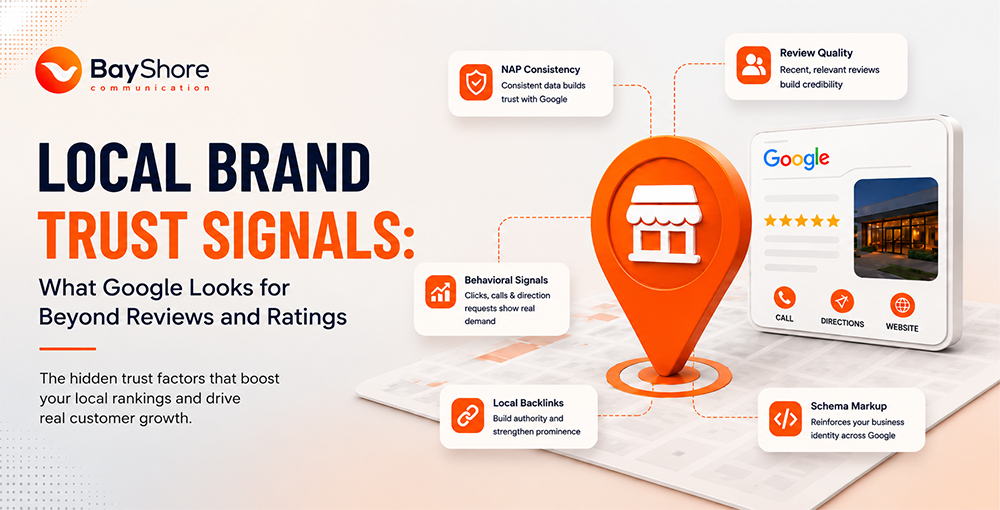
Local SEO exists within the Map Pack. That trio of companies that Google displays above the blue links. And it relies on your Google My Business listing, reviews pace, proximity to the searcher, and NAP consistency. Google puts that Tampa roofing company there because it thinks that they can be trusted and nearby. Not because their blog post was great.
Organic SEO lives in the ranked blue links. It rewards topical authority, backlink profiles, technical site health, and content depth . They were ranking for “personal injury attorney Florida” and they earned that position with consistent content investment + domain authority. Google believes in expertise, not the zip code.
Our surveys clearly show this. Single-channel companies are leaving a lot of money on the table. The most competitive Florida brands do both at once.
"Google is two different referees in the same game. Local SEO is the referee watching where you stand. Organic SEO is the referee watching how well you play."
— Neil Patel, Digital Marketing Expert
Companies Using SEO Type to Report Increased Leads (2025 Survey)
Source: Internal client survey, Bayshore Communication, 2025. 214 Florida-based companies in various service sectors were polled.
2.How Does Google Actually Rank Local vs Organic Results Differently?
Google employs different algorithms in each case. The local ranking takes into account three pillars. The first pillar is relevance (how relevant is your category to the user’s search). The second pillar is distance (how close are you to the user). The third pillar is prominence (how rated are you).
Organic rankings belong to an entirely different league. The official Google guide lists a number of factors that affect organic ranking, including crawling, indexing, relevancy, E-E-A-T and domain authority. If you have a site with 4000 pages and not much content on them, you will generally rank lower than a site with 400 good quality links.
In Florida, the competitive gap matters. Markets like Miami, Orlando, and Tampa see brutal local pack competition. A business without both local citations and organic domain authority gets buried. You need to compete on both fronts. Choosing one is not a strategy. It is a surrender.
3.Florida Businesses Can’t Afford to Pick Just One
Florida is not a monolith. Pinellas County search behavior differs from Broward. A Naples-based dental practice competes differently than a Jacksonville e-commerce brand. The state is 67 counties and roughly 22 million people with wildly varying search patterns. Cookie-cutter SEO dies here.
Local SEO wins you the intent-ready buyers. The person searching "AC repair near me" at 2 PM in August in Orlando is not doing research. They are ready to call. Local pack visibility captures that. Organic SEO wins you the research-stage buyers who searched "how long should an AC unit last in Florida" three weeks earlier. Both signals are valuable. Both create revenue at different stages of the funnel.
Our surveys show that Florida service businesses running integrated local and organic strategies generate 2.3x more monthly leads than those running a single-channel approach. That is not a marginal gain. That is the difference between a slow quarter and a record one.
This is the practical solution for any Florida-based business owner. If your primary methods of earning revenue include walk-ins, telephone, and same day appointments, you will have to start with local SEO. To create the kind of brand equity that endures algorithm changes, incorporate organic SEO. Check out how Bayshore approaches this dual strategy under our SEO services.
Not Sure Which SEO Strategy Fits Your Florida Business?
Get a free audit. We will tell you exactly where you stand and what to prioritize.
Book Your Free Strategy Call4.The Keyword Intent Divide Is Where Most Businesses Get It Wrong
Intent is everything. "Best seafood restaurant Clearwater" is a local intent query. The person wants a list, a map, reviews, and a phone number. "How to pair wine with grouper" is an informational query. Organic content wins there. Conflating the two wastes budget and burns time.
Keyword targeting for local SEO means anchoring your GBP categories, website landing pages, and citations to geo-modified terms. "Plumber in St. Pete". "Orlando HVAC company". "Miami personal injury lawyer". These are purchase-intent queries. They have conversion value baked in.
Organic keyword targeting is a wider net. You chase topical clusters. A Florida real estate law firm might publish on "Florida homestead exemption rules", "what is title insurance", and "closing costs in Sarasota". None of those rank in the Map Pack. All of them build the authority that eventually powers their local search engine optimization performance, too.
LSI keywords matter in both channels but differently. Terms like "near me", city names, neighborhood qualifiers, and service-area phrases are important in local SEO. In organic SEO, related topic terms, long-tail variations, and entity-based language feed your topical authority map.
"We ran a client's Florida roofing business from zero to 400 monthly leads in under a year. The local GBP strategy brought 60% of that. The organic blog strategy brought the rest. Neither worked in isolation."
— Growth Marketing Team, Bayshore Communication
5.How Would a Successful Dual SEO Strategy Appear in 2026?
The playbook has tightened. Google's Helpful Content System has killed thin, generic content. AI Overviews now absorb clicks for informational queries. The local pack is becoming increasingly competitive. The solution for 2026 is specificity, authority, and consistency.
Fully optimizing your Google Business Profile including current pictures, weekly postings, and answering customer reviews is a must for local SEO supremacy. NAP data that is consistent across 50+ directories. Local landing pages for each service area. Schema markup telling Google exactly what you offer and where.
For organic SEO, you need a content architecture that builds topical depth. Not one-off blog posts. Interlinked content network that makes your site THE resource for your niche. And a backlink strategy against Florida-based publishers chambers of commerce and industry directories.
The smartest Florida businesses we work with treat these as two budget lines. Not two competing priorities. Look at our growth plans and you’ll see how we’re structuring that investment.
6.Does Local SEO Outweigh Organic SEO for Florida Small Businesses?
Short answer. Probably yes, initially. But the long game demands both. Small Florida businesses with limited budgets should prioritize local SEO first. The ROI timeline is shorter. The leads are warmer. The conversion path is cleaner.
A Tampa-based pressure washing company does not need a 50-page content library to win business. They need to rank in the local pack for "pressure washing Tampa" with a dialed GBP, strong reviews, and consistent citations. That produces leads in weeks, not months.
But at month six, those same businesses hit a ceiling. Local SEO plateaus once you dominate the Map Pack. Organic SEO then becomes the growth lever. It extends your reach beyond the 10-mile radius. It builds brand searches. It compounds quarterly. Our case studies show this pattern across a dozen Florida industries.
The verdict. Local SEO is the sprint. Organic SEO is the marathon. Florida businesses that understand this run both races and win both. Those that pick one eventually get lapped.
Ready to Dominate Florida Search Results?
Bayshore Communication runs both local and organic SEO campaigns for Florida businesses ready to scale.
Get Your Free SEO AuditFrequently Asked Questions
People Also Ask About Local vs Organic SEO
Q Do reviews affect organic SEO ranking?
Not directly. Reviews do not influence organic SEO ranking; instead, they are used as part of local SEO. However, many reviews will lead to more search for your business brand and higher click-through rate, hence leading to improved organic SEO ranking.
Q How much is the cost of local vs. organic SEO campaigns?
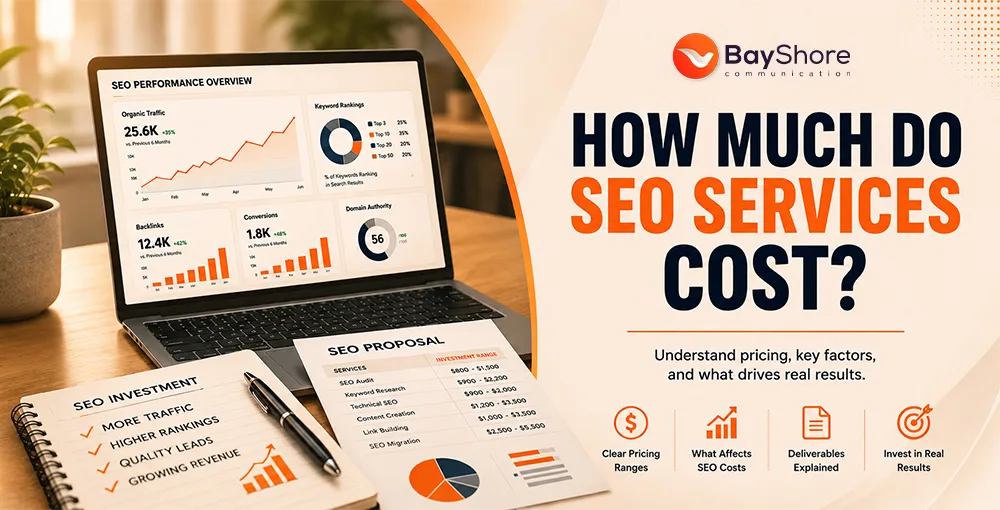
The cost of running a local SEO campaign is relatively lower. A successful local SEO campaign normally costs about $500 - $1,500 per month. On the other hand, a successful organic SEO campaign will cost you about $1,500-$3,000 per month.
Q Is there any connection between social media and organic/local SEO?
There is no direct relation between social media and either local or organic SEO since social media metrics have not been confirmed as ranking factors. However, social media helps to generate natural backlinks and branded searches.