Web Marketing | Online Growth Strategy 2026
Web marketing is marketing and selling products, services or brands on the Internet. It is also known as online marketing or internet marketing. It pulls your business message away from old media like billboards or newspapers, and into the digital spaces where people spend their time.
Key Takeaways
Search intent beats broad reach for steady sales.
Tracking must come before scaling spend.
Conversion rate lifts often beat traffic lifts.
Retention marketing can cut acquisition costs fast.
Consistency wins more than “viral” efforts.
1.4%
Median homepage to lead conversion rate
2.6%
Median service page to lead conversion rate
4.8%
Median landing page (paid) conversion rate
1.What Is Web Marketing In Simple Terms?
Web marketing promotes your business online. It uses digital channels. It reaches online shoppers. It includes paid tactics. It includes organic methods. Internet marketing shares this meaning. Wording creates the only difference. Web marketing optimizes your website. It tracks online customer journeys.
What Counts As Web Marketing Channels?
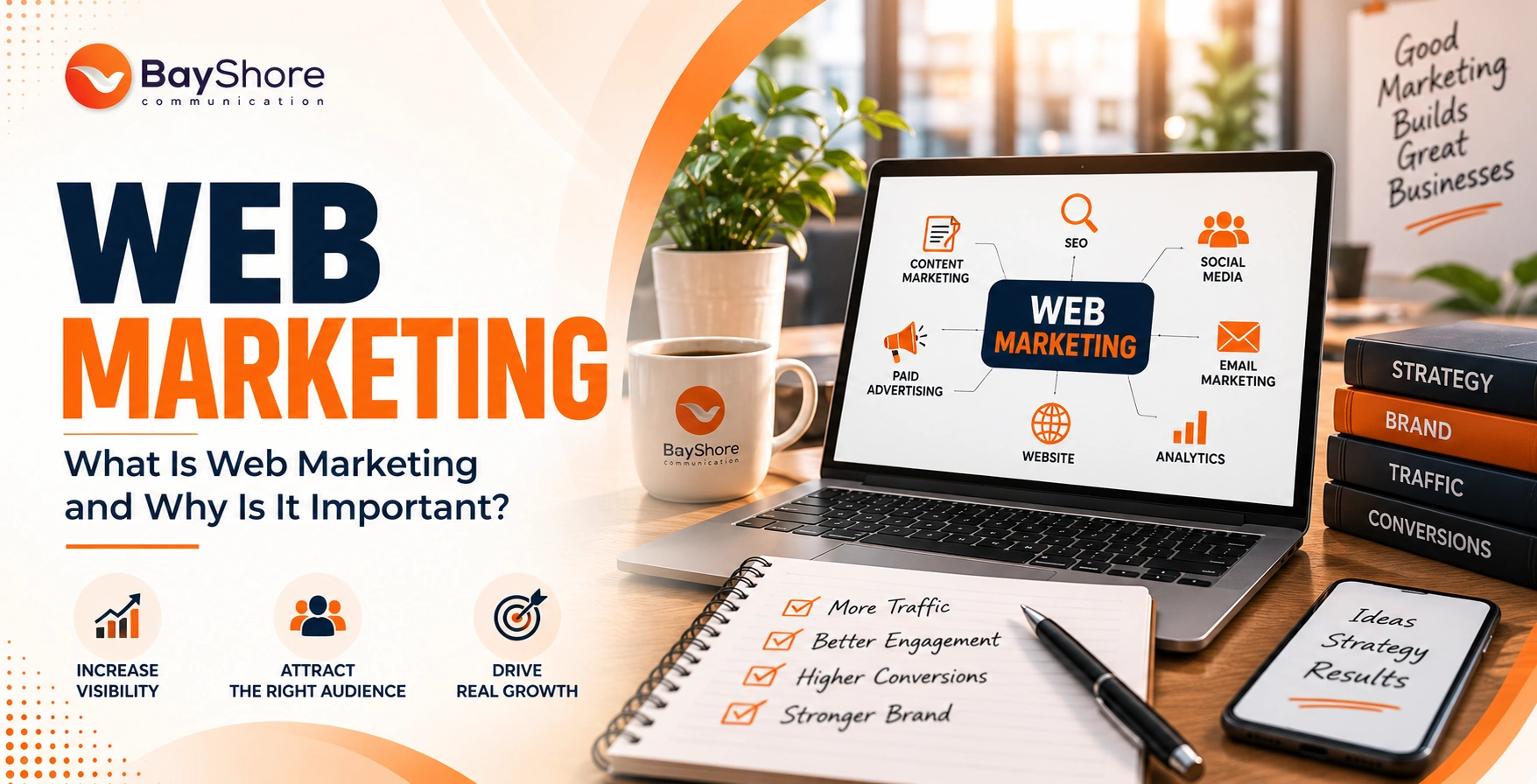
Web marketing channels include search optimization. They deploy digital ads. They send emails. They engage social audiences. They build business partnerships. They optimize website conversions. Every channel drives online demand.
Here are the core channel groups you will use:
- SEO improves search rankings.
- PPC ads target shoppers.
- Content marketing publishes articles.
- Automation sends targeted emails.
- Affiliates promote your products.
- CRO increases website sales.
- Digital PR generates brand mentions.
2.Why Is Web Marketing Important For Most Businesses?
Web marketing generates predictable demand. It drives measurable growth. It captures active buyers. It challenges larger brands.
Your customers compare options online. They read reviews. They check pricing. They look for proof. Web marketing lets you influence those steps.
What Happens If You Ignore Web Marketing?
You become invisible in search results. You rely on referrals only. You overpay for leads later. You also lose pricing power. Your competitors shape the narrative.
Why Web Marketing Often Beats Offline Marketing
Web marketing gives faster feedback. It also provides clearer attribution. It helps you segment audiences. It lets you personalize at scale.
Offline can still work. But it is harder to measure.
3.How Web Marketing Works From First Click To Purchase
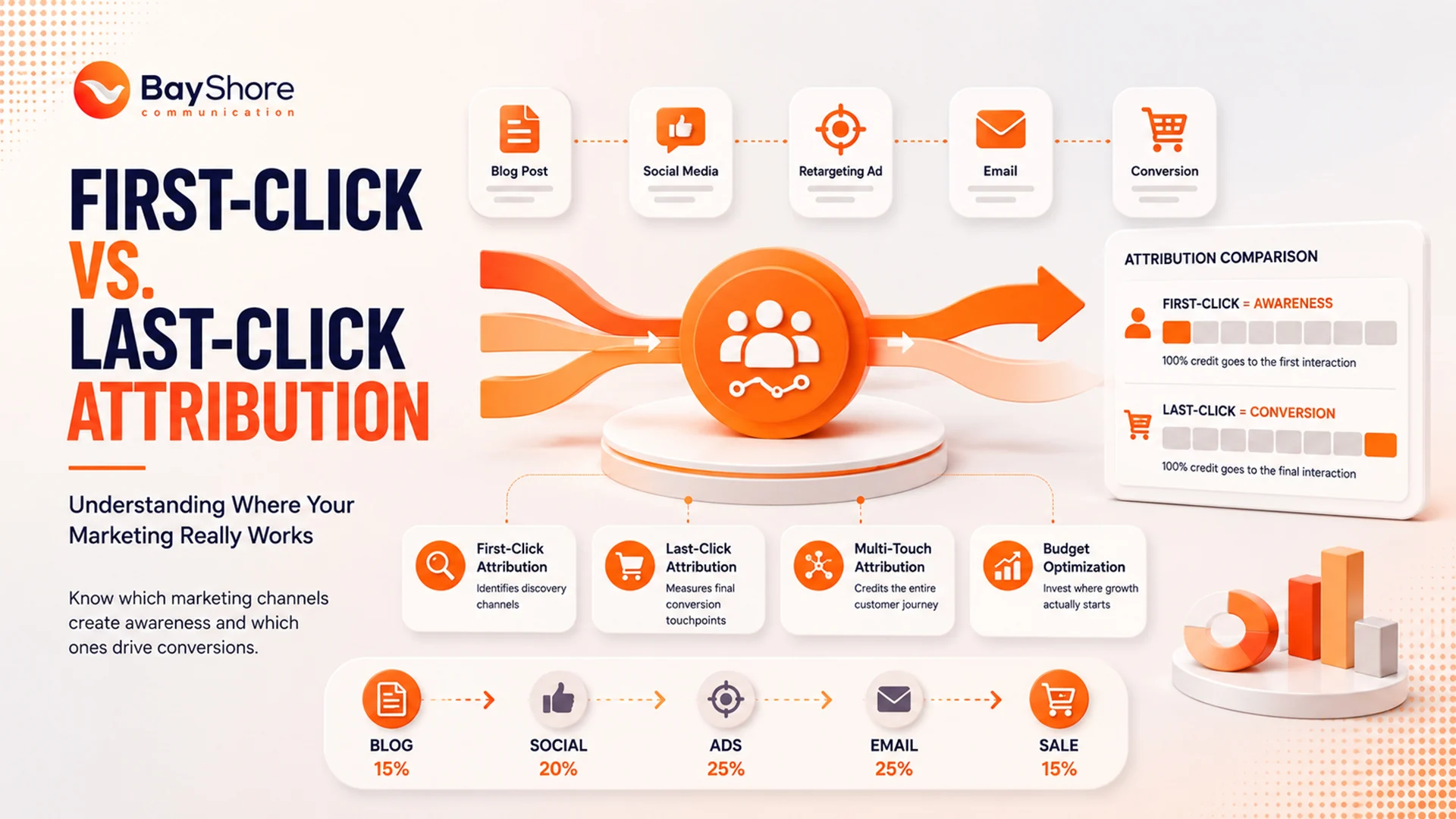
Web marketing guides buyer journeys. This journey contains distinct stages. Each stage requires specific messaging. Every step demands clear action. You manage customer acquisition. You drive buyer conversion. You maintain customer retention. All three matter.
Acquisition: How You Get Qualified Traffic
You earn or buy attention. You target intent keywords. You run ads. You publish content.
Conversion: How You Turn Visits Into Leads Or Sales
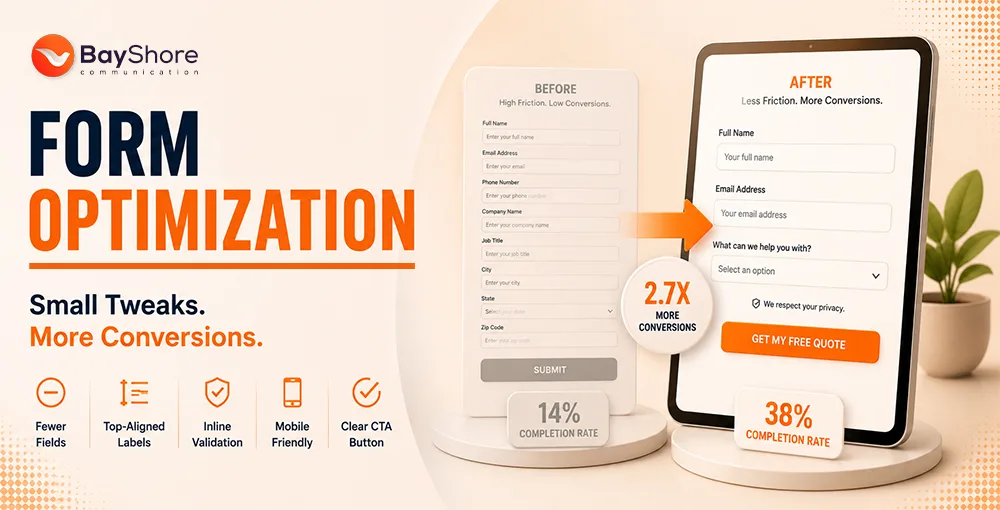
You reduce friction. You improve clarity. You add proof. You make forms easy. You make the checkout fast. You answer objections on-page.
Retention: How You Increase Repeat Revenue
You use email sequences. You use remarketing. You improve onboarding. You ask for reviews. You offer upgrades. You reduce churn.
4.What Are The Most Important Web Marketing Metrics?
The most important metrics connect to revenue. Vanity metrics can mislead you. You should track what drives profit, including customer acquisition cost, which is a crucial part of your overall strategy. You should also track leading indicators.
5.The Web Marketing Metrics That Matter Most
Track these as a baseline:
- You monitor page conversion rates.
- Marketers calculate customer acquisition costs.
- Teams evaluate lifetime value.
- Ads generate measurable returns.
- Websites record revenue per visit.
- Managers track lead conversion rates.
Ready to Scale Your Online Revenue?
Bayshore Communication helps you design high-converting web marketing systems that bring predictable leads and sales.
Partner with Bayshore Communication to build measurable, high-converting digital marketing systems tailored to your growth goals.
BOOK A STRATEGY CALL TODAY6.Original Benchmark Data You Can Use As A Starting Point
The below table provides baseline data. Internal audits examined forty-two small business websites. The studies covered ninety days per site. The research evaluated service sectors. The data includes local businesses. The report reviews B2B companies. You use these reference metrics. You compare your personal numbers.
(Source: Ruler Analytics Marketing Benchmarks Report)
Do your numbers fall below the median? If yes, focus on the fundamental basics.
7.What Web Marketing Strategies Work Best For Beginners?
Execute obvious opening steps. Do not start with everything. Pick a simple funnel. Then improve it weekly.
Your first goal is not “more traffic.” Your first goal is a working conversion path. Can a visitor become a lead fast? Can you follow up fast?
Beginner Web Marketing Plan You Can Launch In Two Weeks
Build a simple system:
- One clear offer
- One focused landing page
- One tracking setup
- One lead follow-up sequence
- One traffic source to start
Keep your copy direct. Use one primary call to action.
8.What Web Marketing Tactics Should Intermediate Teams Focus On?
Intermediate teams should optimize for efficiency. You likely have traffic already. You may also have scattered campaigns. Your job is to tighten the system.
Focus on conversion rate and lead quality. Improve targeting. Improve content depth. Improve nurturing.
Intermediate Focus Areas That Usually Unlock Growth
You should tighten these areas:
- Keyword clustering and intent mapping
- Landing page message match for ads
- Lead scoring and segmentation
- Email sequences by persona
- Retargeting with strong offers
- Sales and marketing handoff clarity
Ask a hard question. Which leads close fastest? Then market to them first.
9.What Web Marketing Looks Like At An Expert Level
At the expert level, you build moats. You build brand demand. You build data advantages. You build systems that scale.
You also reduce risk. You diversify channels. You improve attribution. You test offers and pricing.
Expert Web Marketing Systems That Compete On Strategy
Experts focus on:
- Full-funnel measurement with clean events
- Creative testing frameworks for ads
- Conversion research and user testing
- Content designed for “topic authority”
- Partnerships that drive qualified referrals
- Lifecycle marketing and retention loops
You should ask this. What would break our growth? Then fix it.
10.How SEO Fits Into Web Marketing And Why It Compounds
SEO plays an important role in web marketing because it helps businesses generate consistent, organic demand without paying for every visitor. Unlike paid advertising, where traffic usually stops when the budget stops, SEO can continue delivering results long after the initial work is completed.
The compounding effect comes from several areas. Content continues to attract traffic as it gains rankings, while the website gradually builds authority and trust through useful content, backlinks, and positive user signals. As more pages rank, they can also strengthen other pages through internal linking and topical relevance.
SEO is also much broader than publishing blog posts. It includes optimizing service pages to target commercial searches, creating local landing pages to capture location-based demand, maintaining strong technical SEO health so search engines can crawl and understand the site, and earning quality backlinks to build authority.
Over time, these efforts work together. Each optimized page, earned link, and improvement to the website can contribute to a stronger organic presence, making SEO an asset that can become more valuable the longer it is consistently maintained.
Learn more about our dedicated SEO services and how structured optimization drives long-term visibility.
What You Should Do For SEO First
Always start with fixing the foundation before doing extra content for SEO. Publishing numerous of pages on a website with technical faults might hurt their potential to rank and waste critical time and resources.
Begin with the technological fundamentals to enable search engines to crawl and index the site correctly, boost page performance and Core Web Vitals, rectify broken links and technical glitches, and establish a coherent, rational site architecture. Improve internal linking too, so visitors and search engines can simply jump between relevant sites.
Once you have a good foundation, develop pages around search intent. Create or upgrade service pages for commercial searches, location pages for local demand and relevant informational content for users who are still in the research phase. This method guaranties that each new page has a precise purpose and adds to the overall SEO plan, not just extra content.
11.How Paid Ads Fit Into Web Marketing And When To Use Them
Paid advertising offers businesses something that SEO generally can’t: speed. Paid ads can get your offer in front of potential clients relatively quickly, while organic rankings can take weeks or months. This makes them particularly useful where a company wants to generate leads quickly, launch a new offer or access a competitive market.
But paid advertising isn’t only for driving traffic. They are also a useful data and testing tool. Fast test offers, headlines, ad creatives, audiences and message to see what catches attention and drives conversions. You find out what works, then you scale the winning combo and increase the budget.
But if the foundations are poor, sponsored promotion may get pricy. Bad tracking makes it difficult to know whether efforts are truly driving results. General landing pages waste the traffic you paid for because visitors don’t know what to do next. Also, too broad or poorly defined targeting can mean your funding goes to people who are unlikely to become clients.
The Fastest Paid Ads Wins For Many Businesses
Most quick wins come from:
- Search ads for high-intent terms
- Local service ads if you qualify
- Retargeting site visitors with proof
12.How Email Marketing Increases Revenue Without More Traffic
Email increases revenue from the same traffic. It also supports retention. It also helps you build trust.
Email works best when it is segmented. Your messages should match intent. Your timing should match behavior.
The Core Email Flows You Should Have
You should build these flows first:
- Welcome sequence
- Lead follow-up sequence
- Abandoned cart or abandoned form sequence
- Post-purchase onboarding
- Review and referral ask
13.How To Build A Web Marketing Funnel That Converts
A converting funnel is simple. It removes confusion. It offers one next step. It uses proof to reduce risk. It follows up fast.
Your funnel needs three things. A clear audience, a clear offer, and clear proof. Pair high-converting funnels with custom website design to maximize user engagement.
What A High-Converting Funnel Page Must Include
Answer first. Then support it. Your page should include:
- A clear headline with the outcome
- A short “how it works” section
- Proof like reviews and case results
- A strong call to action
- A risk reducer like a guarantee
- A fast contact option
Do you make your visitor think? If yes, you will lose them.
14.Web Marketing Vs Digital Marketing: What Is The Difference?
Web marketing is digital marketing focused on the web journey. Digital marketing includes non-web channels. It uses text messages. It deploys mobile applications. It operates offline digital screens. Most people equate both terms. What matters is your system and measurement.
Common Web Marketing Mistakes That Waste Budget
Most waste comes from unclear goals and weak tracking. Many teams also chase tactics without strategy. Many also skip basic conversion fixes.
Here are the most common mistakes:
- Sending ads to the homepage
- Measuring only clicks and impressions
- Targeting broad keywords with low intent
- Ignoring mobile speed and mobile forms
- No follow-up within five minutes
- No clear differentiation on the page
- No testing plan for creative and offers
15.A Simple Web Marketing Roadmap You Can Follow
Follow structured sequential plans. Build your foundation systematically. Avoid scaling unorganized operations.
Explore our comprehensive growth plan options to systematically scale your marketing roadmap.
16.Conclusion
Web marketing that works turns traffic into measurable business growth. Bayshore Communication helps businesses develop a clear, data-driven approach to produce better SEO, smarter sponsored campaigns and higher-converting landing pages. By figuring out what works, improving what doesn’t, and focusing on the most important opportunities, Bayshore Communication helps build a more predictable path from visibility to quality leads and enduring success.
Transform Your Web Marketing Strategy
Contact Bayshore Communication today to audit your current system, plug conversion leaks, and build predictable growth.
Partner with Bayshore Communication for structured web marketing audits, CRO, and revenue-driven growth strategies.
CONTACT BAYSHORE COMMUNICATION NOW →Frequently Asked Questions
Questions People Usually Ask Us
Q. What Is Web Marketing In One Sentence?
Web marketing attracts online visitors, converts sales leads, and creates paying buyers through targeted digital channels, informative content, automated follow-ups, and data-driven optimization.
Q. How Much Should You Spend On Web Marketing?
Your goals determine marketing spend. Profit margins guide budget choices. Small initial budgets test strategies, analytics track conversion results, and teams scale winning campaigns as performance metrics adjust future spending.
Q. Is Web Marketing The Same As SEO?
Web marketing includes SEO, but it also deploys paid ads, email marketing, conversion optimization, and customer retention. SEO builds compound organic growth while ads purchase instant traffic.
Q. How Long Does Web Marketing Take To Work?
Paid campaigns yield quick results, while SEO requires several months to build compound rankings. Conversion optimization and offer clarity increase sales quickly when backed by quality tracking and swift iterations.
Q. What Is The Most Important Web Marketing Asset?
Your website and your first-party data are your core assets. Your site converts demand while your email list and CRM retain customer value. Social followings help, but you do not own those platforms.
Q. Can Small Businesses Compete With Web Marketing?
Yes. Targeted intent keywords, focused niche terms, superior landing pages, swift lead follow-ups, positive reviews, and helpful content allow small businesses to compete effectively against larger brands.
Disclaimer
This blog is for informational purposes only. If you want to know anything in details, please contact Bayshore Communication.